New postdoc explores what happens when medicines stop working
As part of the AUFF Nova project When the Drugs Don’t Work…, Maurizia Mezza examines how scientific paradigms shape our understanding of microbes, medicines and antimicrobial resistance.
A short intro: Who are you and what’s your professional background?
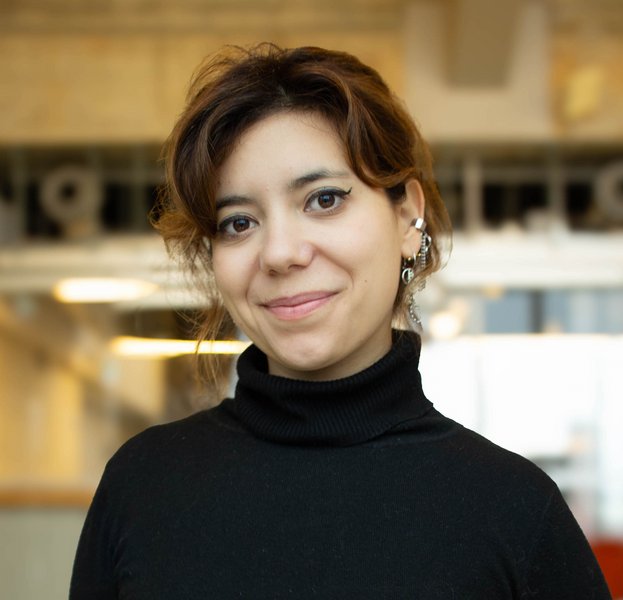
Hello everyone, my name is Maurizia Mezza, and I am a medical anthropologist working across science and technology studies and global health. I have a diverse background, ranging from a BA in Fashion Communication and another in Social Psychology to training in conflict resolution studies and Theatre of the Oppressed. I recently completed my PhD at the University of Amsterdam, where my research focused on pharmacovigilance and how scientific evidence about vaccine side effects is produced, contested and recognised.
Before joining BTECH, I conducted research on the intersections of health, climate change and the environment in Colombia and Peru. Across my work, I am interested in how knowledge is produced, whose experiences and expertise are recognised, and how research can engage more responsibly with different publics, communities and ways of knowing. I am particularly committed to inclusive and participatory knowledge production, drawing on creative methods and collaborations across academia, art and civil society to explore different ways of engaging with humans, more-than-humans and the worlds we share.
What is your area of work?
At BTECH, I work as a postdoctoral researcher on the AUFF Nova project ‘When the Drugs Don’t Work…’, led by Associate Professor Birke Otto. The project explores the role of scientific paradigms in pharmaceutical innovation, with a particular focus on antimicrobial resistance. My work looks at how different ways of understanding microbes, medicines, innovation and uncertainty shape possible responses to AMR.
Why did you choose to work at BTECH?
I was drawn to the Department of Business Development and Technology because of its interdisciplinary environment and openness to exploring innovation not only as a technical or economic process, but also as something shaped by social, ethical, environmental and political questions. This makes BTECH a very exciting place for my research.
Would you like to share a bit about yourself, your family and your hobbies?
Outside work, I enjoy spending time with friends and family, who are spread across the world – which means that I travel a lot to see them. Luckily, I love travelling, and it is an important source of inspiration for me, along with art, the sea and knitting.
I am very excited to be part of BTECH, and I look forward to meeting many of you, learning more about your work and finding opportunities for conversation and collaboration.